Eighteen Months Apart
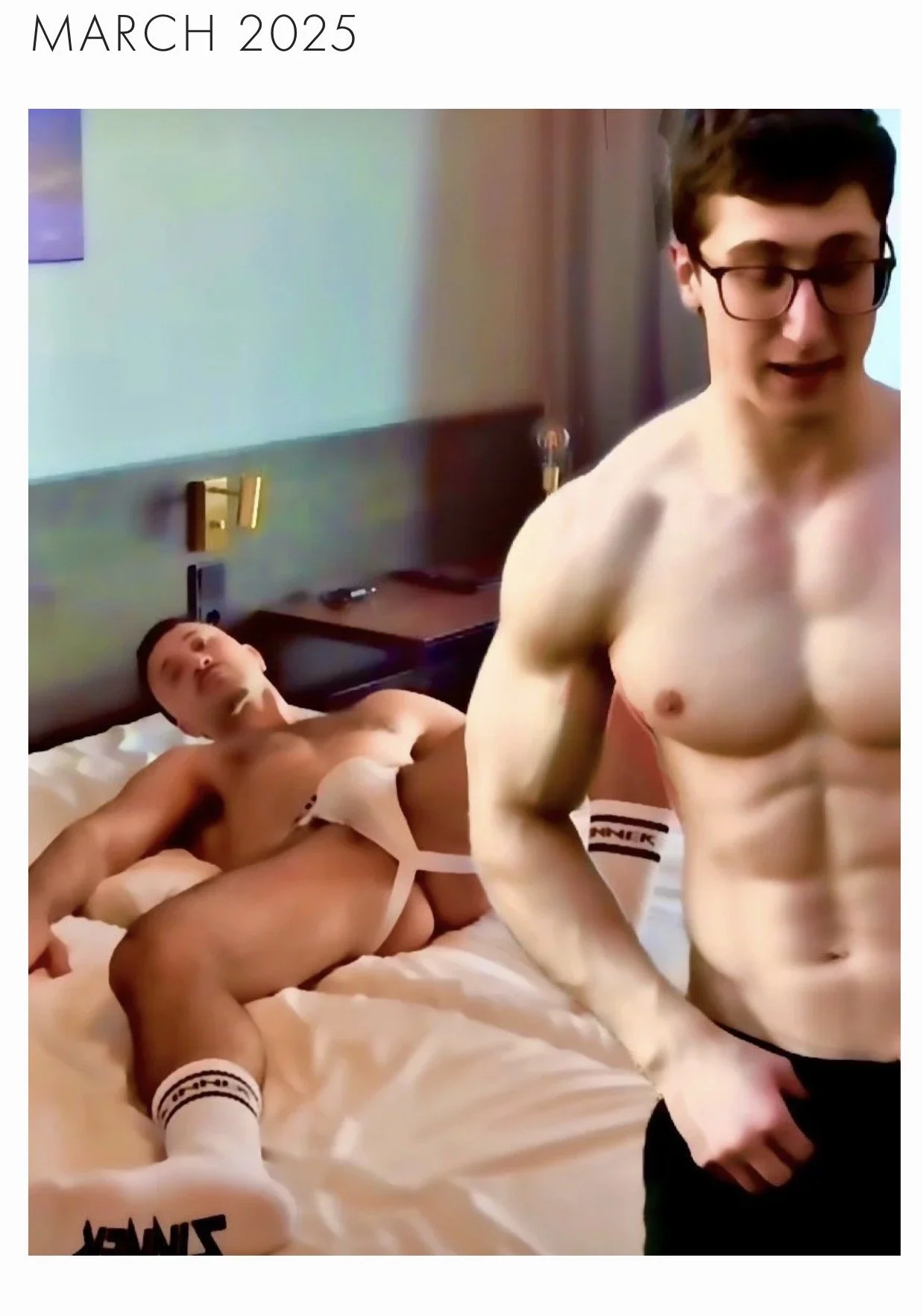
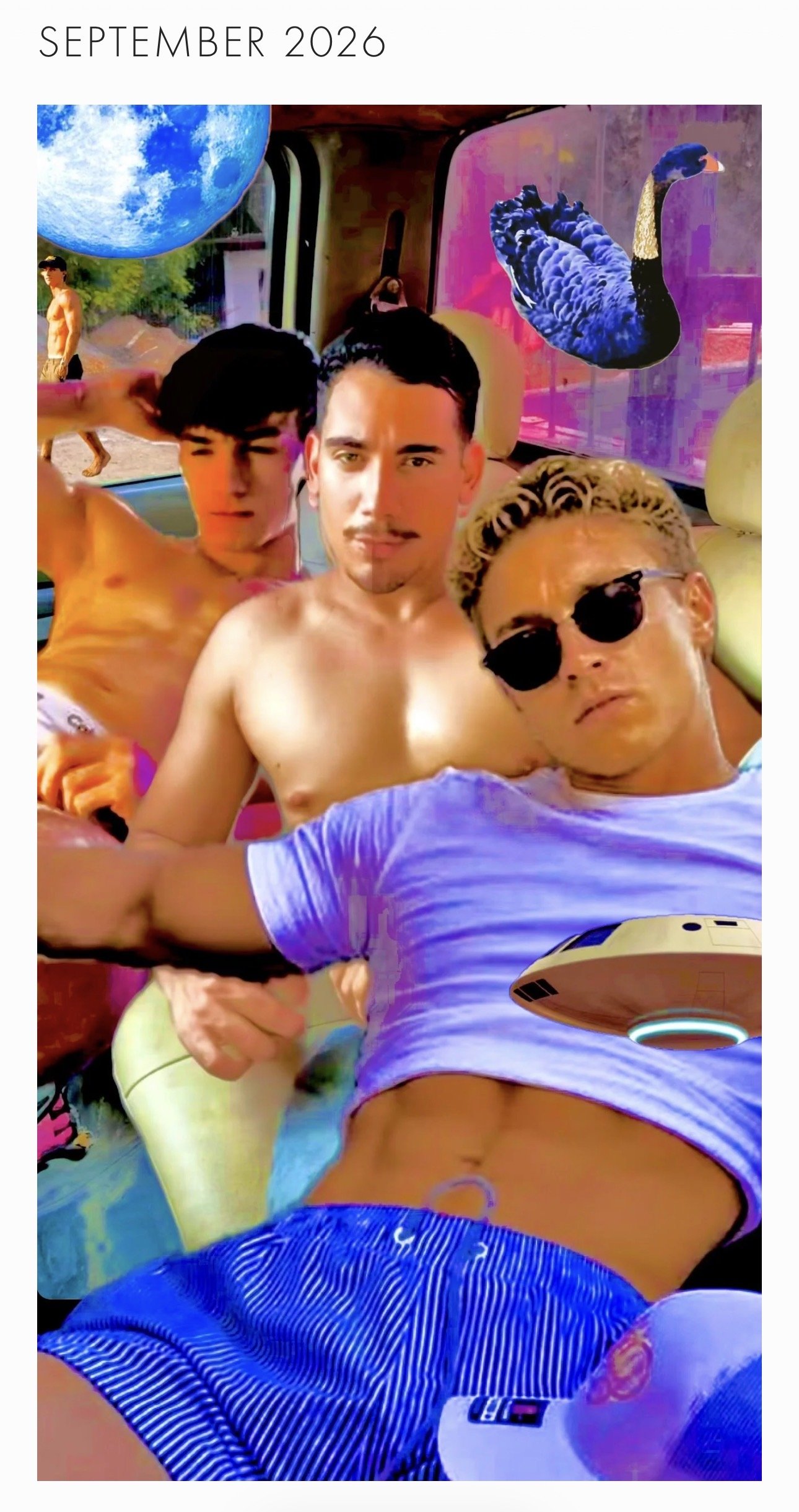
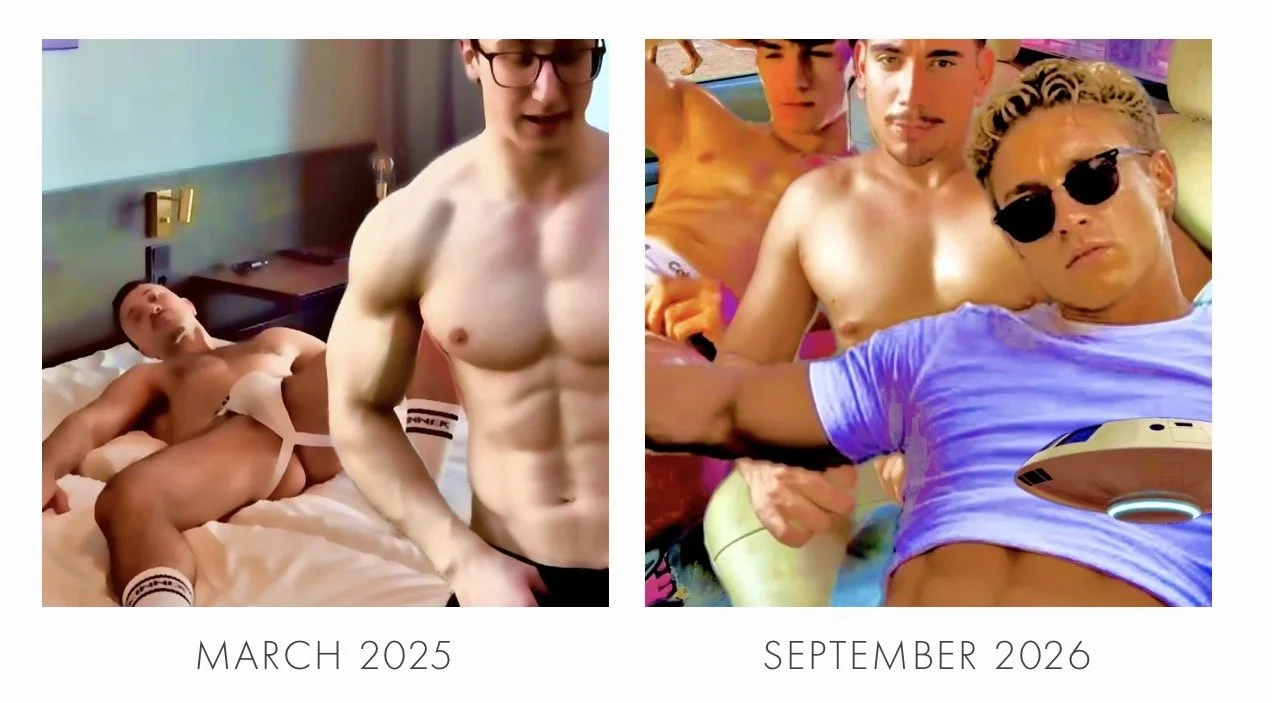
These two collages sit about a year and a half apart. The first is from March 2025. The second is from September 2026. Looking at them side by side shows what has shifted in the work and what has stayed constant.
What stays the same
Both pieces keep the same core method: a photographic male figure or figures placed against a built-up background of unrelated imagery. Both use bodies as the compositional anchor, with everything else in the frame arranged around them. Both still work in bright, saturated color, and both still pull from a mix of sources rather than staying inside one visual register.
What has changed
The March 2025 piece keeps its background elements relatively separate from the figures. The hotel room, the nightstand, the bedding all read as a coherent single space, and the two men are placed within it fairly naturally.
The September 2026 piece is more densely layered. A moon, a black swan, a passing figure on a beach, and a UFO-like object are all packed into the same frame as the three men in the foreground. The color treatment is also more processed here, with a flatter, more posterized look across the skin tones and background alike, compared to the more photographic color of the earlier piece.
The composition has also gotten more crowded. Where the earlier piece has two figures and a handful of identifiable background objects, the later piece stacks in more elements at once, with less visual separation between what is “background” and what is “foreground.”
What this suggests about the process
The direction of travel is toward more layering, not less. The impulse to juxtapose is still central to the work, but the later piece pushes that impulse further, combining more disparate elements in less space and flattening the color treatment further from anything resembling a single, coherent photographic scene. The earlier piece could still pass, at a glance, for a slightly altered photograph. The later piece cannot.
From Behan:
“The objective is the same, to build queer identity in the American landscape. And the sourcing is the same, looking daily and finding both figures and ground on social media and elsewhere online.
What I think is changing is a movement away from a sense of realistic space, originally to emphasize the historical reality of queer presence. Now the visual goal has evolved to include breaking that illusion of space, which I find endlessly interesting.”