Updating the Great American Nude
Tom Wesselmann’s Great American Nude series ran from 1961 into the 1970s. It placed the female nude inside interiors built from mass-produced American objects: patterned curtains, plastic fruit, appliance ads, furniture catalogs. The nude stood for heterosexual desire as the culture assumed and displayed it at the time.
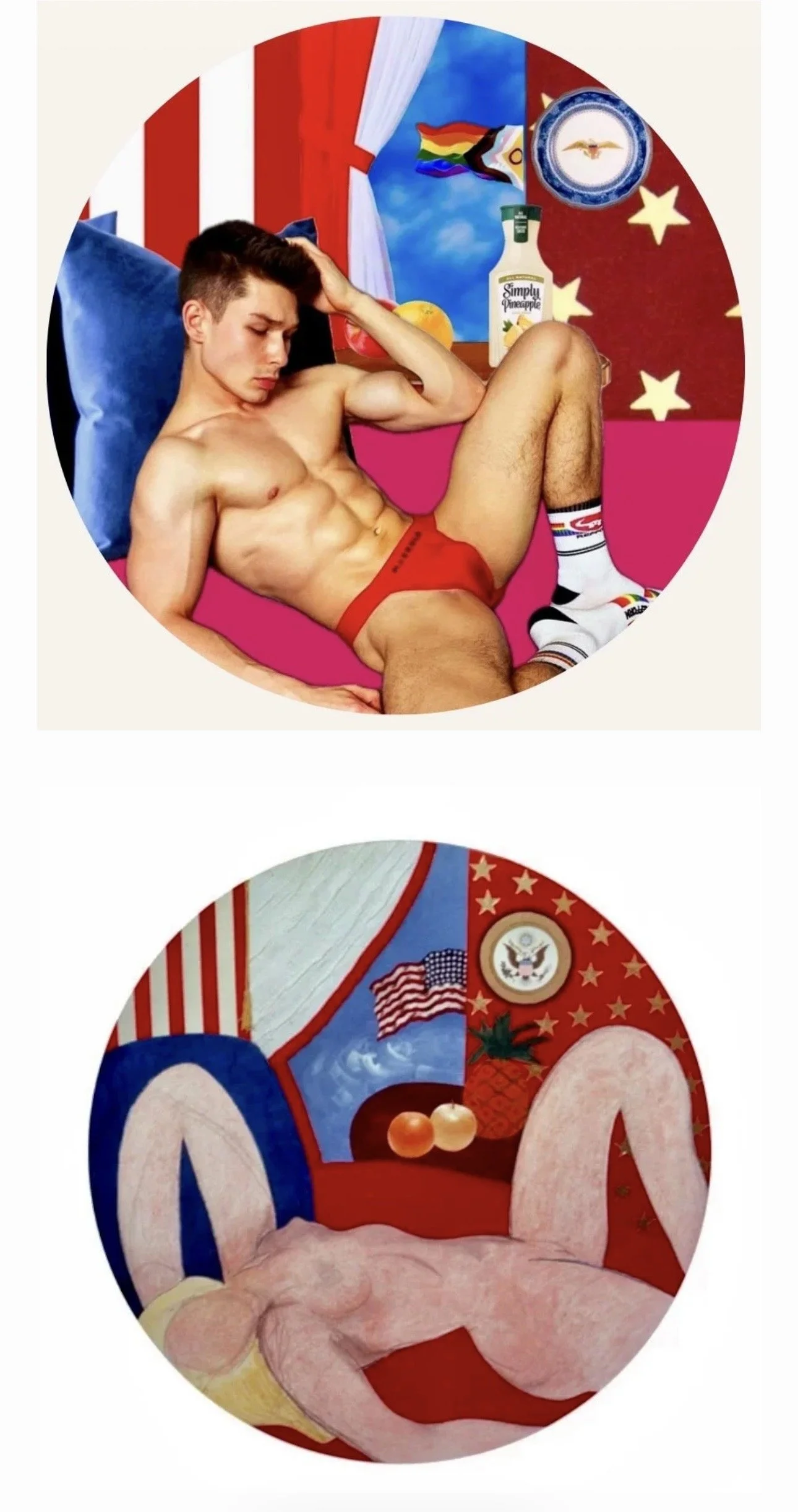
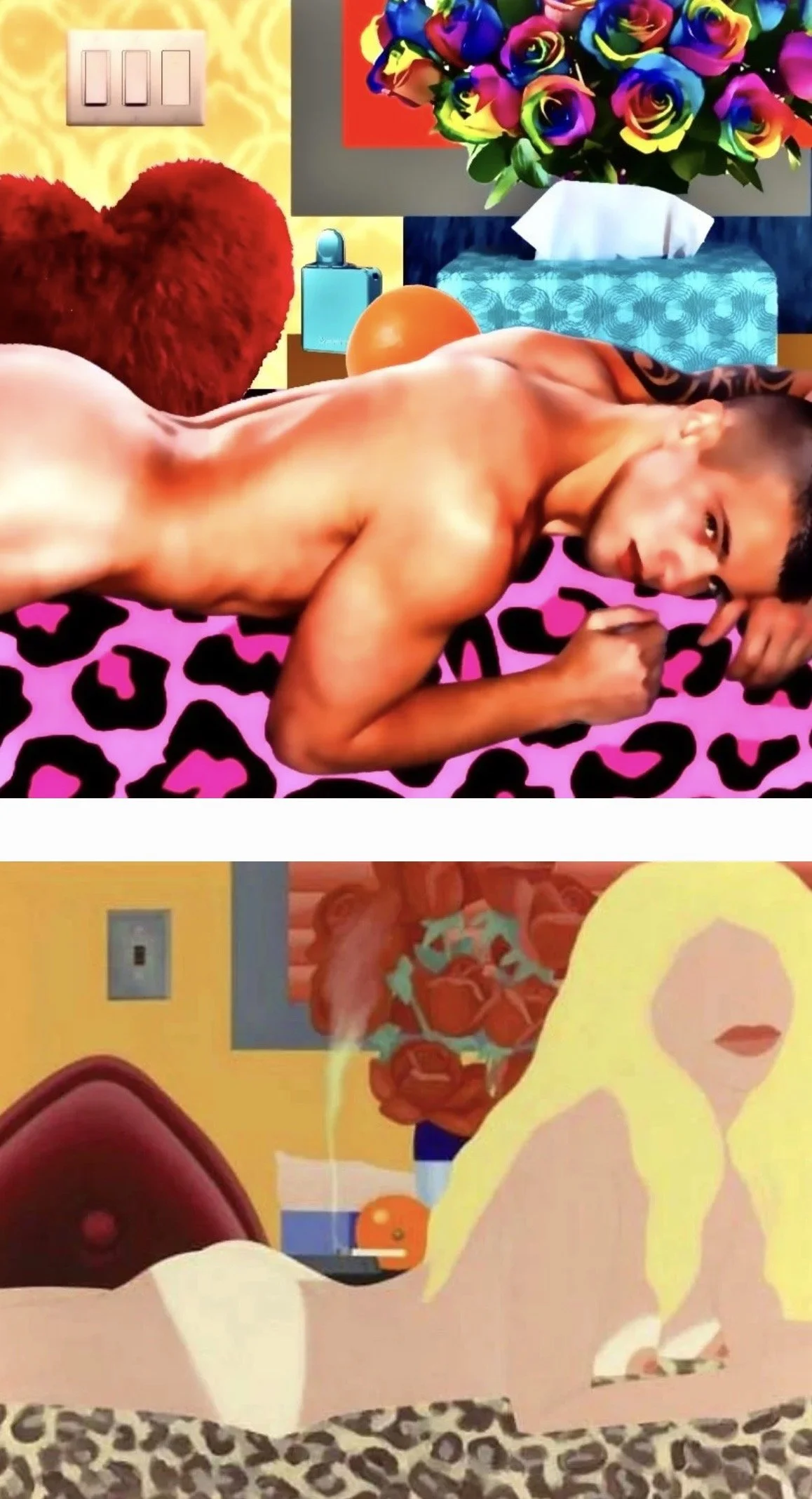
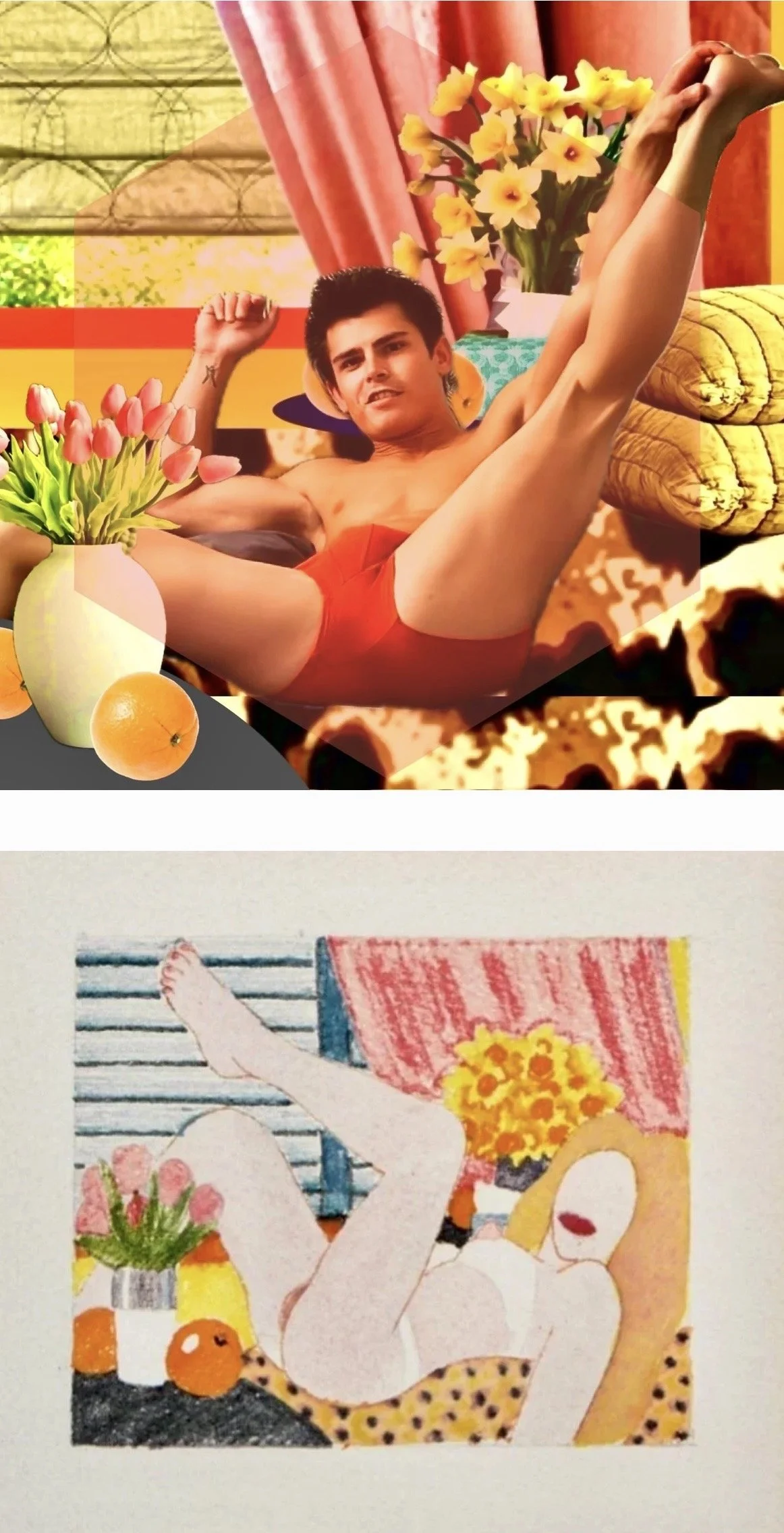
This series takes the same structure and changes the subject. The male nude replaces the female nude. The desire on display is gay rather than straight. Everything else about Wesselmann’s method carries over: the flattened planes of color, the collage layering of unrelated objects into one scene, the interior as a stage set for the body at its center.
What the interiors carry now
Wesselmann’s interiors held mid-century consumer goods: television sets, cigarette packs, canned goods, wallpaper patterns pulled from the period. The objects placed the nude inside a specific decade of American domestic life.
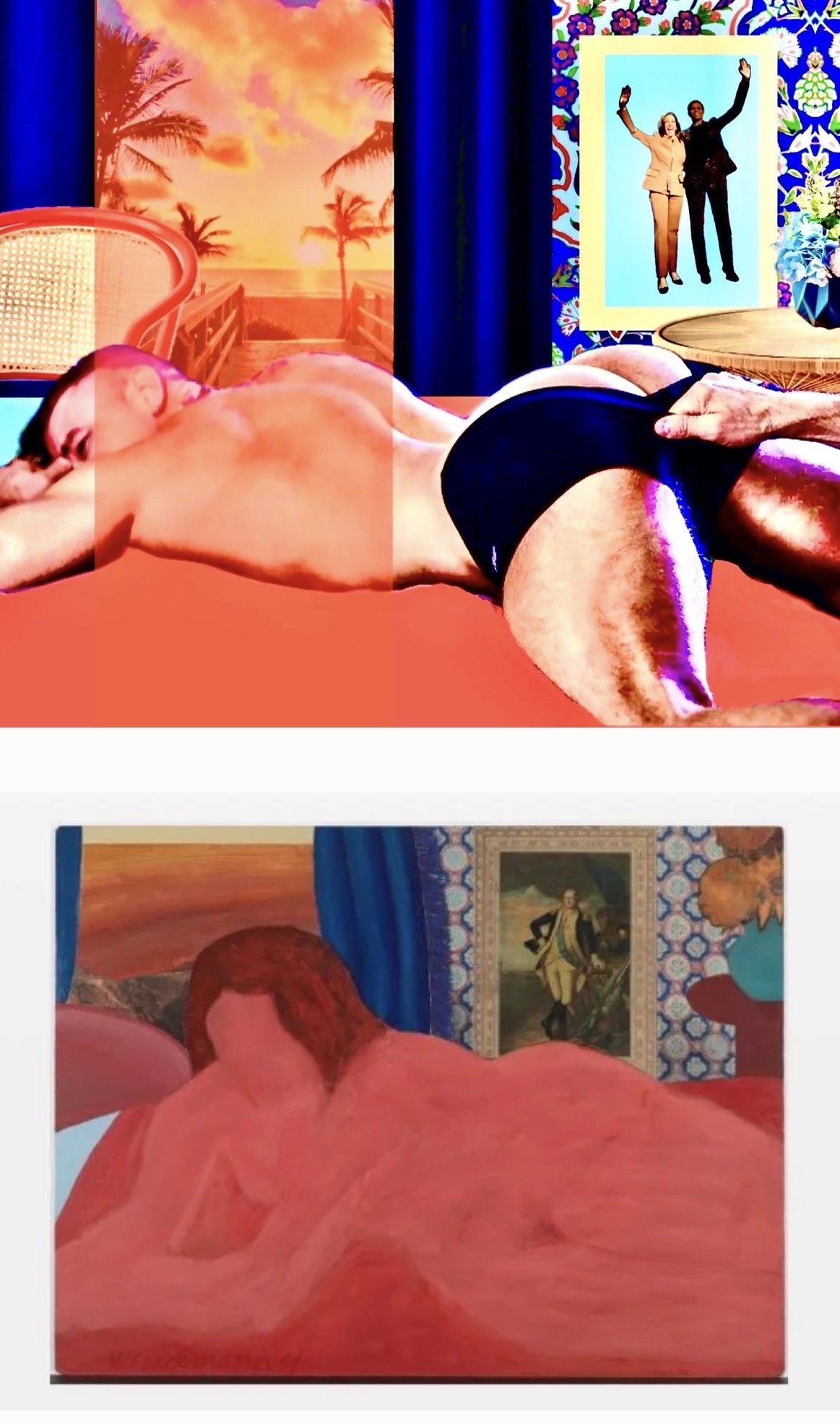
These collages update that inventory. Rainbow flags sit next to American flags. A framed photo of two people waving from a stage stands in for the political imagery Wesselmann might have used. Smartphone-era color saturation and digital layering replace paint and printed ephemera. The technology of collage-making has changed from scissors and paint to image editing software, and the resulting surfaces look different because of it: harder edges, more uniform color fields, a flatness that reads as digital rather than painted.
What the body is allowed to represent
Wesselmann’s female nude was not a specific woman. She stood for an available cultural fantasy, presented without controversy because heterosexuality needed no argument in that context.
The male nude in this series occupies the same position, but the representation itself carries weight that Wesselmann’s original never had to carry. A gay male nude, presented as casually desirable and as generically “American” as Wesselmann’s woman was, makes a claim: that this body belongs in the same visual category of unremarkable, mass-market desirability. The surrounding objects—flags, patriotic stars, suburban landscapes, a couple waving from a podium—place that body inside the ordinary furniture of American life rather than outside it.
The throughline
Wesselmann took the female nude and made her interchangeable with the products around her, all equally flattened, equally consumable. This series does the same with the male nude, updated for a culture where a gay man’s body can occupy that same everyday, mass-produced visual space. The method is inherited directly. The subject and what it is permitted to mean have moved.