Reclaiming the Cockpit: A Queer Insertion Into “The High and the Mighty”
Behan Works’ practice includes working backward through mid-century material — film stills, product photography, studio portraits — to place queer figures inside scenes intentionally built without them. It is a visual argument that absence in the historical record was not the same as absence in real life. Behan Works corrects the record.
One such example is The High and the Mighty, a film from 1954 about a passenger plane in crisis over the Pacific, with John Wayne as the co-pilot who holds the crew together. Every relationship on screen is heterosexual. Every hero, every villain, every quiet moment of tenderness between crew members happens inside that single frame of possibility.
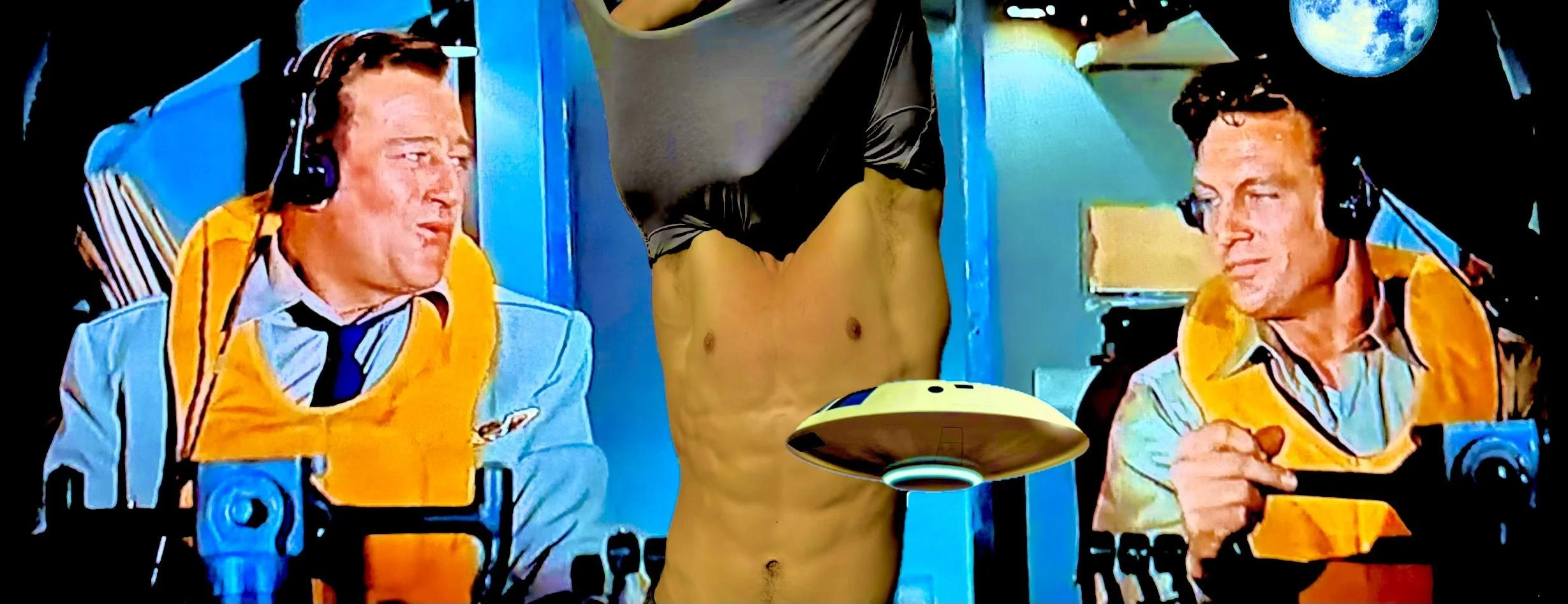
This series works against that frame. It takes stills from the film and places a queer figure directly inside them — not beside the story, not commenting on it from outside, but standing in the cockpit, gripping the same instrument panel, present in the same frame as the original cast.
The Method
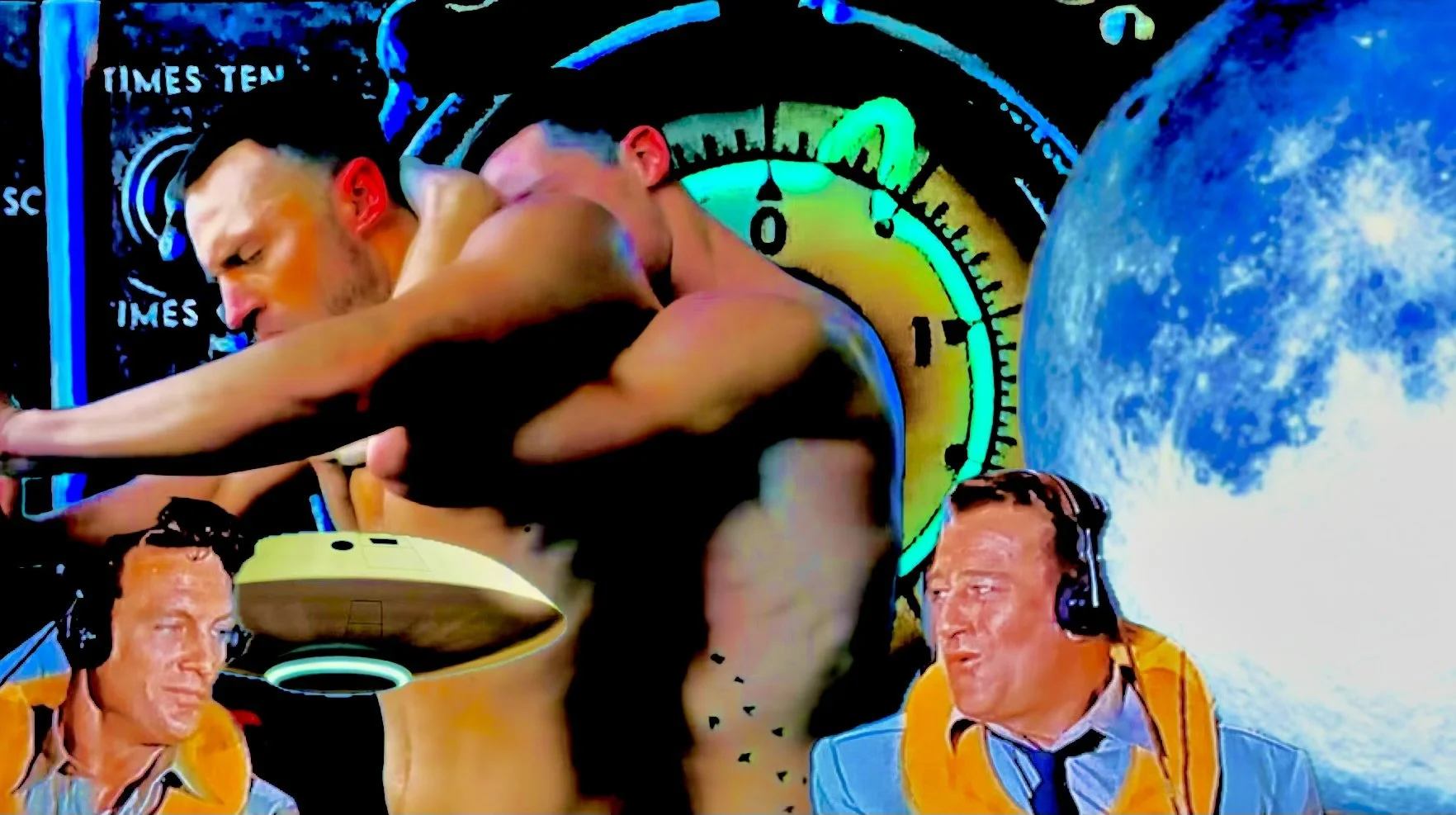
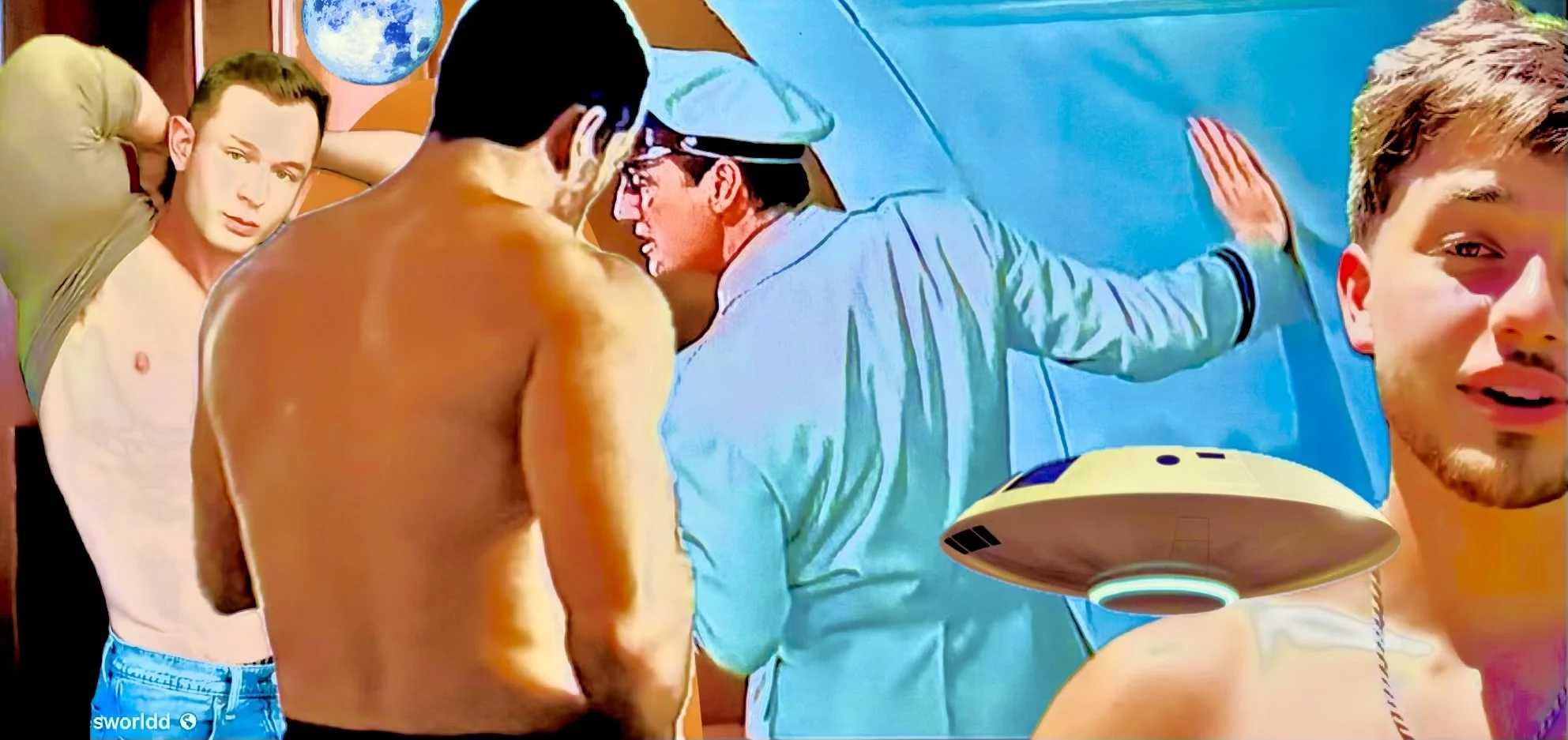
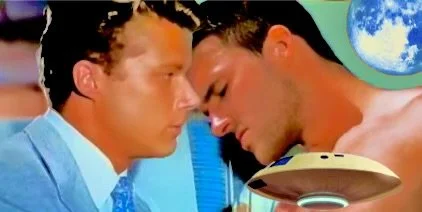
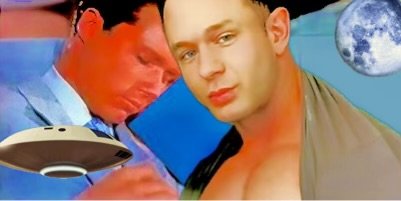
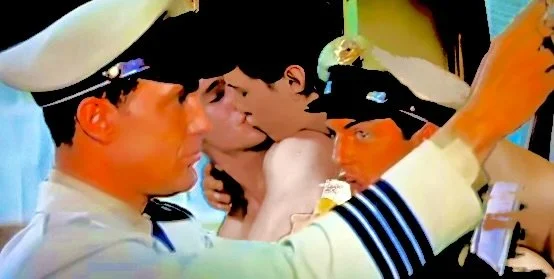
Each piece starts with an unaltered still from the film. A shirtless figure is composited into the same physical space as the original actors — sharing their lighting, their proportions, their position in the frame. The figure is not hidden in a corner of the image. It occupies the center, the foreground, the place the eye goes first.
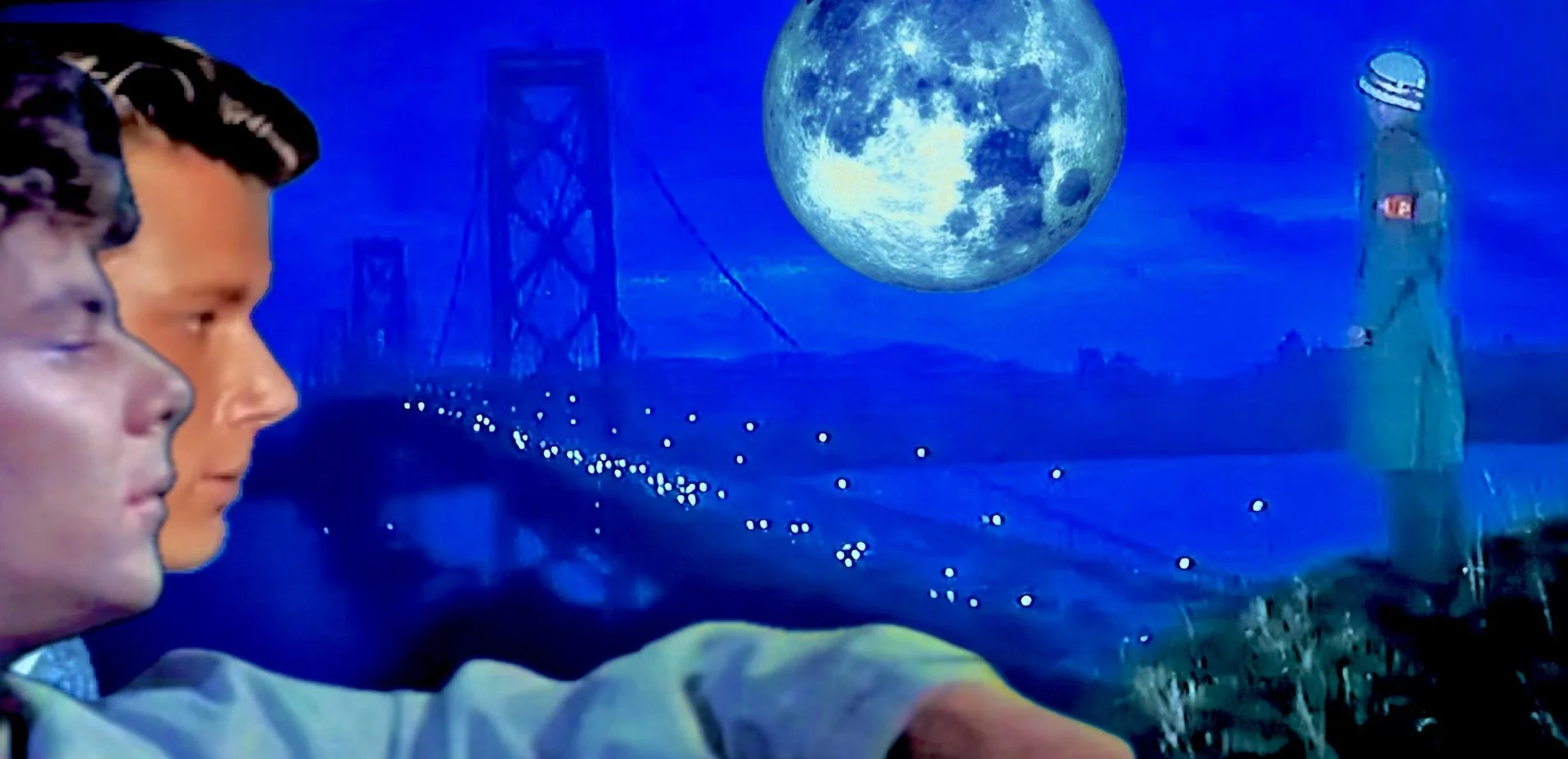
The recurring icons carry the argument. The saucer marks escape, rescue, witness. The blue moon marks longing and desire. Both appear across nearly every piece in the series, turning a set of film stills into a single sustained scene rather than a set of separate jokes.
Why Insert Rather Than Reinterpret
The choice to insert a figure into an existing 1950s film, rather than write a new story from scratch, is deliberate. Reinterpreting the plot to make a character gay asks the audience to imagine an alternate, more honest version of the past. Inserting a figure directly into the original footage makes a different claim: that someone who was gay was surely already there, in the room, on the plane, in 1954 — never filmed, never noticed, never written down, never allowed into the frame.
The work to include gay figures is meant to counter an equally aggressive and intentional work to exclude them. The absence in the original footage was not neutral. It took effort to keep that frame as heterosexual as it is.
The Recurring Figures
Two moments recur across the series. In one, two men stand close together in near-darkness, faces almost touching, in the visual language of an embrace rather than a professional exchange. In another, a uniformed figure and a bare-chested figure occupy the same tight frame that the original film reserved for its heterosexual leads.
Neither moment claims anything about the real actors or the real production. The original footage stays untouched where it appears. What changes is who else gets to be present in it.