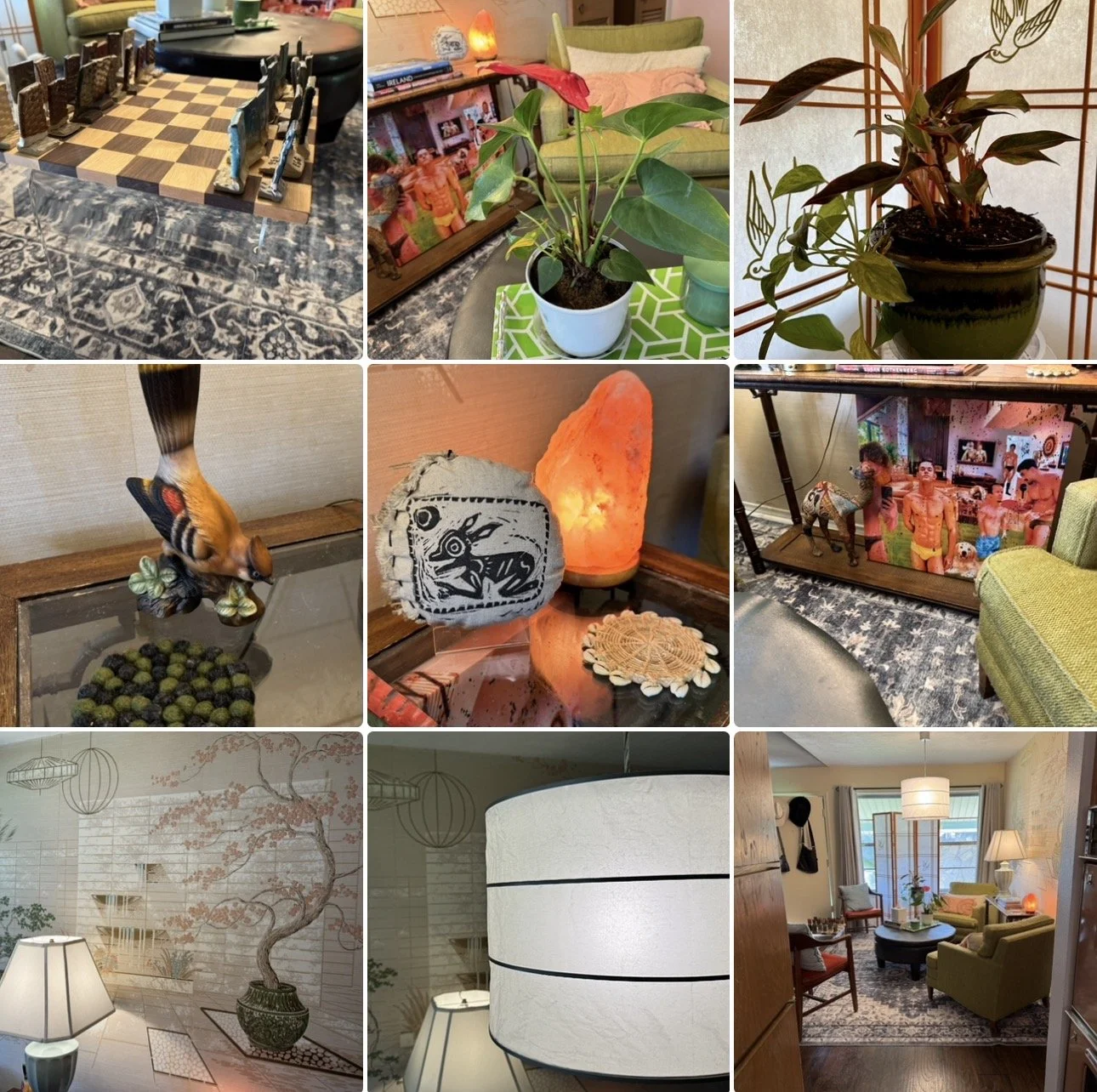
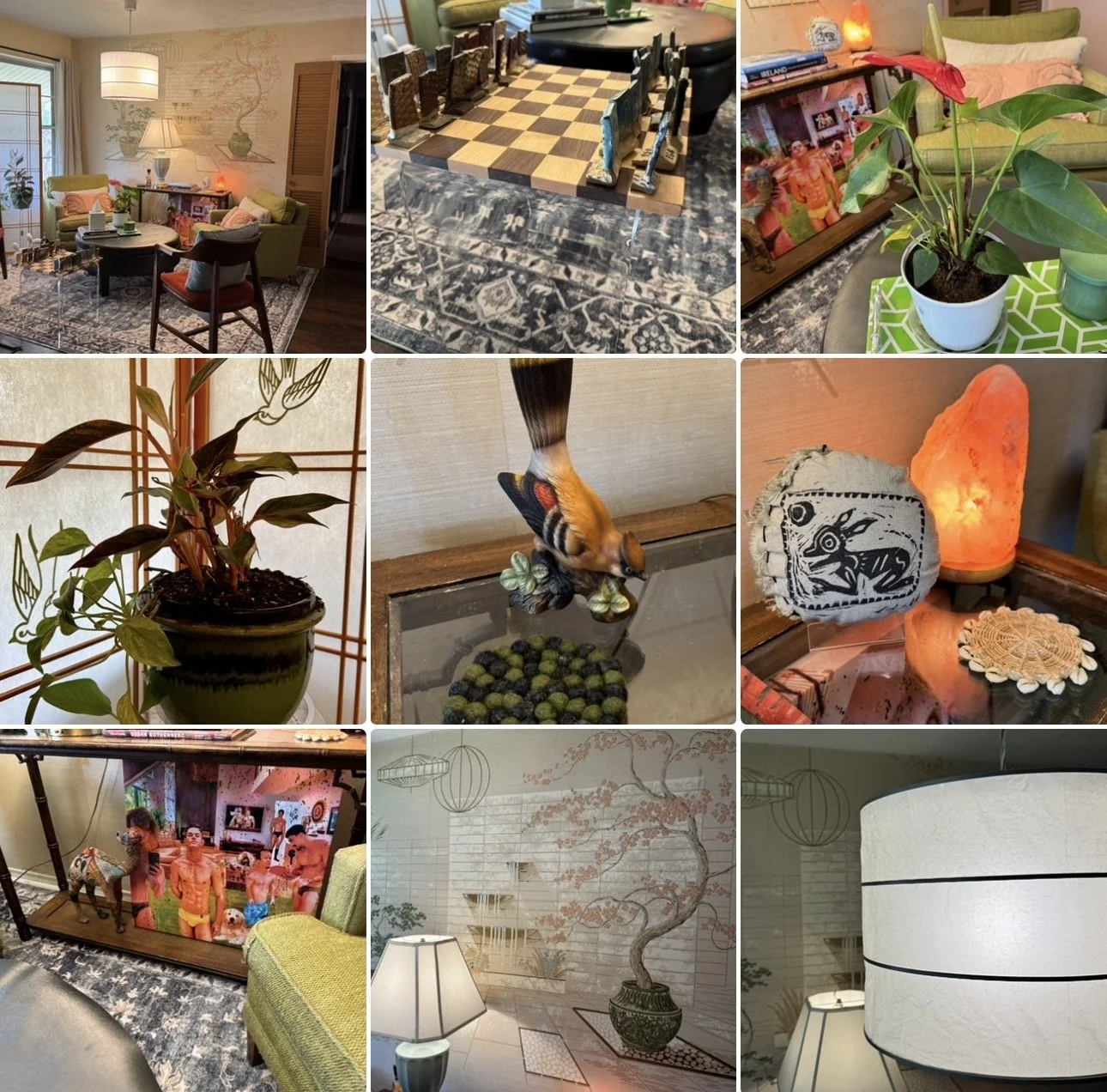
The Dining Room That Grew Up to Be a Lounge
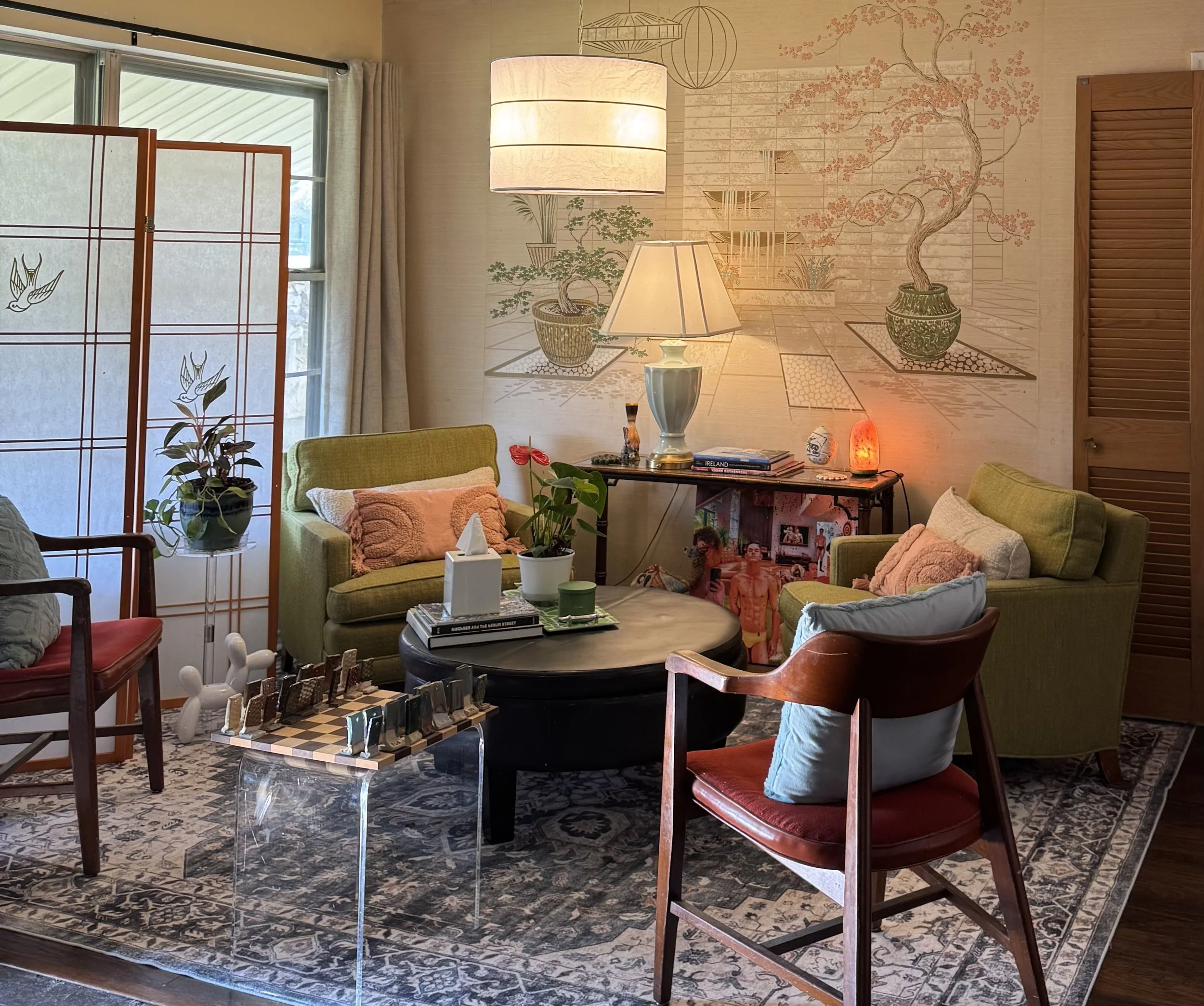
Turning a formal dining room into a lounge is having a real moment in design circles — swapping the stiff dining set for something softer, lower, and made for lingering. I decided to play with that idea while keeping the room’s original bones completely intact. That’s really the design philosophy behind everything I do: understand where a room’s original character comes from, and find a way to enhance and support that origin while still updating it to meet the needs and expectations of how we actually live today. It’s about honoring the past while living in the present, rather than starting over in some HGTV mashup.
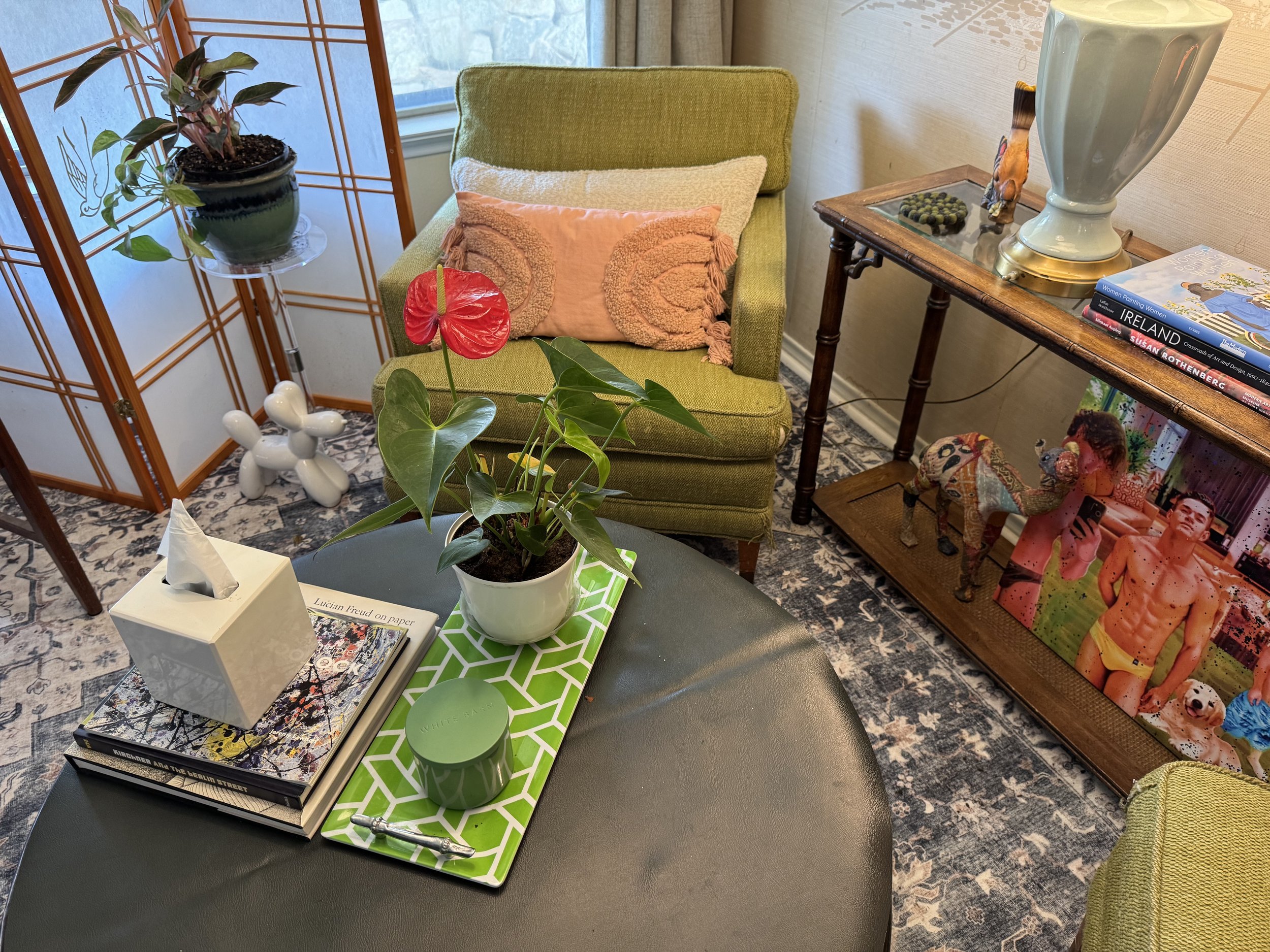
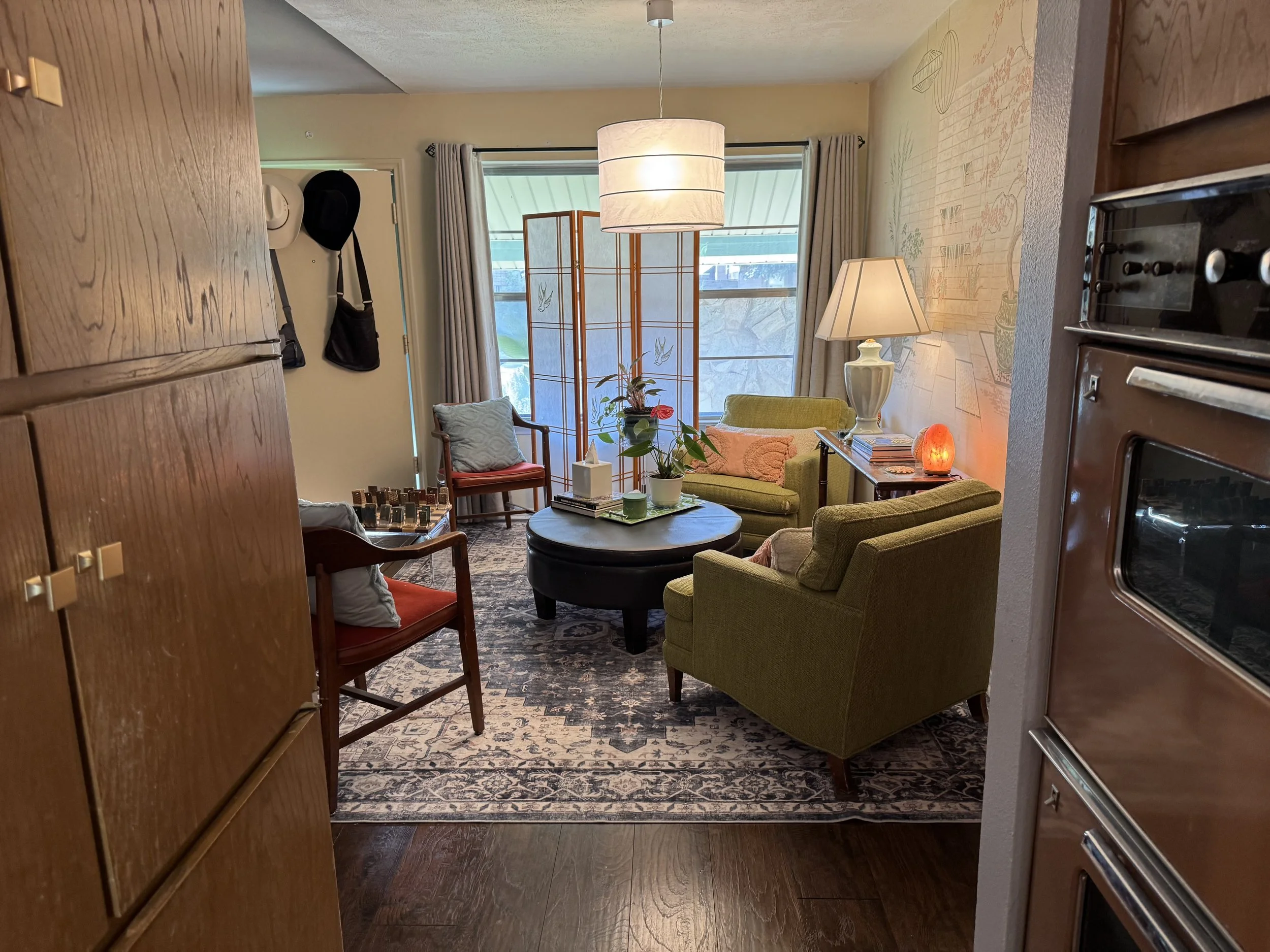
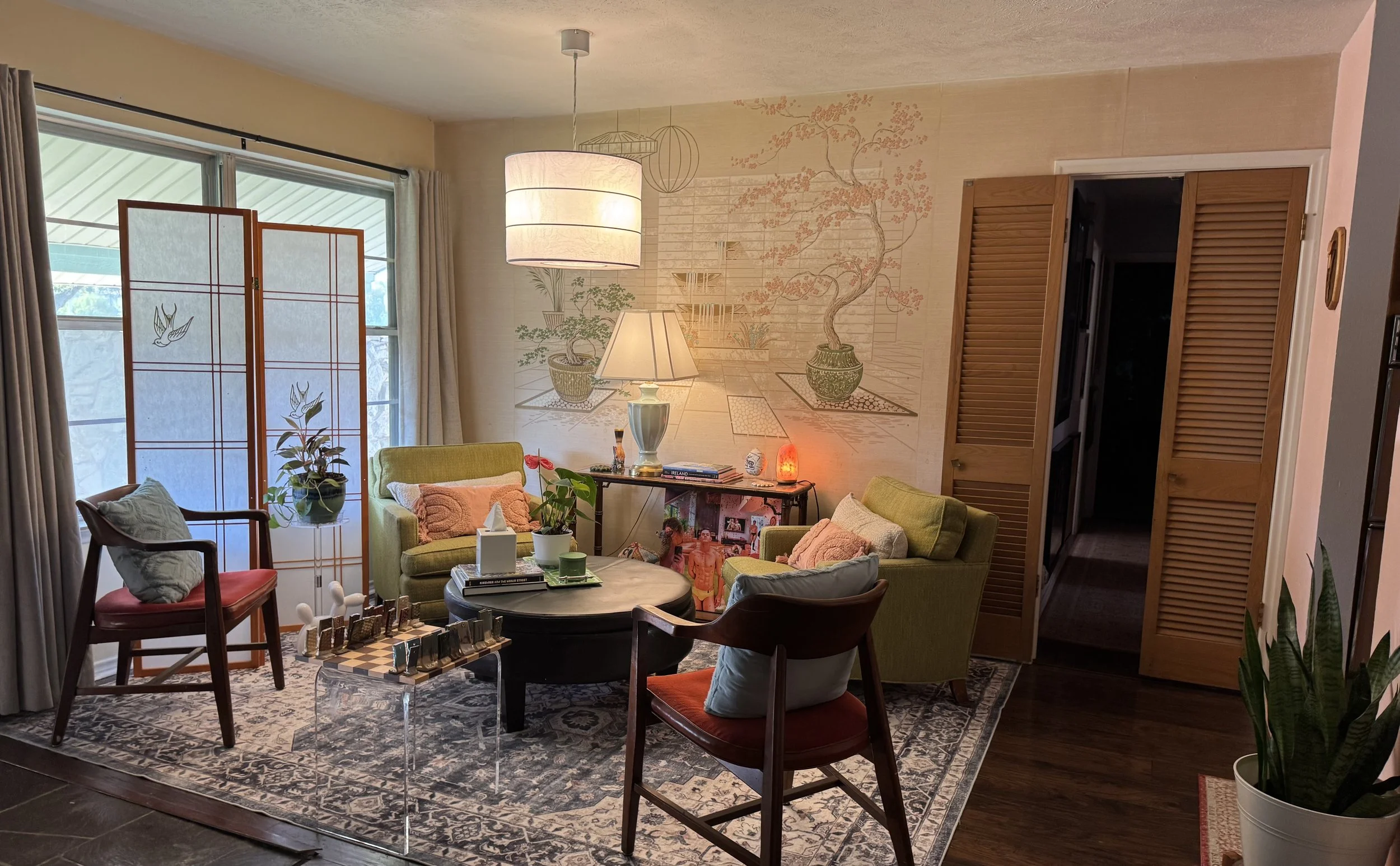
In designing the space, I kept the format of the classic dining room setup: a round table centered under a pendant light, with four chairs around it. The table is now a large faux leather ottoman, and the four dining chairs have become a mix of club chairs and vintage office furniture. Same choreography, entirely different mood.
Where It All Started: A 1962 Wallpaper Mural
Every choice in this room traces back to one thing: the original 1962 wallpaper mural still on the wall, depicting a serene Japanese garden — bonsai in glazed pots, a flowering tree, a fountain rendered with a classic mid-century line.
The first deliberate nod to the mural was swapping the overhead fixture for a paper lantern pendant from IKEA, echoing the illustrated paper lanterns floating in the wallpaper’s own sketched garden. From there, the Japanese garden idea spills into the room for real — houseplants tucked into corners.
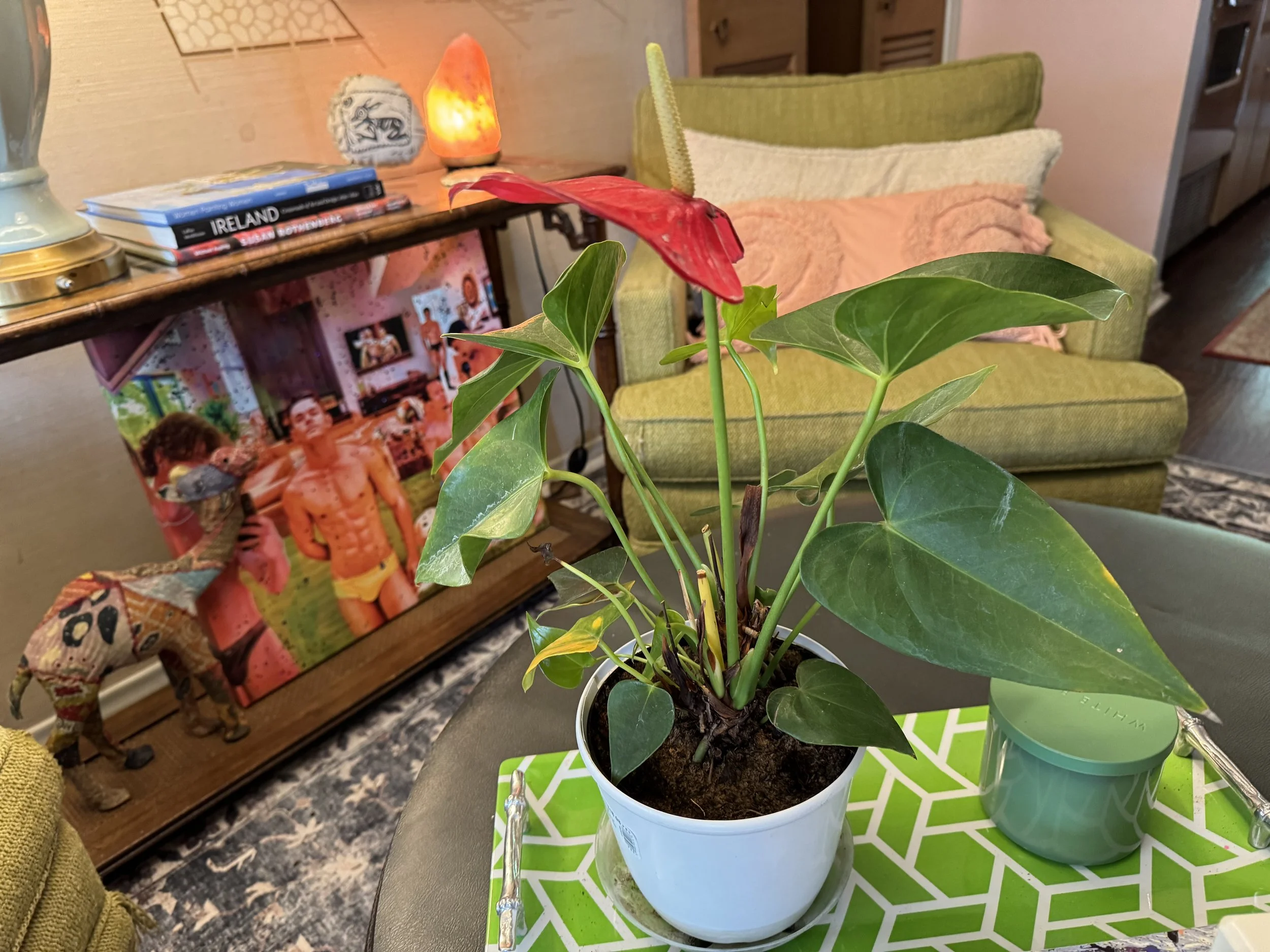
Between the two chartreuse chairs sits a slim Asian-styled sofa table, holding books, a salt lamp, and the ginger jar lamp — carrying the wallpaper’s outside-in garden idea through the room and setting it as the design tone for the rest of the home. Underneath the table, two more pieces continue that conversation: on the right, one of my own digital photo collages, and on the left, a boho-inspired camel figure that was popular in the 1970s and saw a resurgence in the late 2010s — a lucky HomeGoods find.
Outdoors In
Since the wallpaper’s whole theme is nature brought indoors, I leaned into that with a small collection of animal figures scattered through the room. The standout is a small ceramic balloon dog, streamlined and glossy, from Jeff Koons — produced in a mid-century mass-production format that made an original piece of fine art available to a much wider audience. I love that idea: real art, made accessible. Alongside it sits a cottage-core ceramic bird perched near the ginger jar lamp, and a piece of original artwork featuring a small animal worked into a textile. Mid-century sleekness, cottage-core warmth, and original fine art, all standing in for the outdoors the mural imagines just beyond the wall.
Privacy, Light, and Whimsy
The screen tucked into the corner might be my favorite detail in the room. I took bird decals originally designed as car window stickers and applied them in an asymmetrical pattern across the panels — a small, unexpected flourish with its own personality. Functionally, it creates privacy from the front porch, but as a translucent screen rather than a solid one, the room never loses its light. Privacy and glow, at the same time.
To Thrift or Not to Thrift
A huge part of what makes this room feel personal — and what I wanted to spotlight — is how much of it was thrifted, inherited, or made rather than bought new. Making smart decisions in a thrifting process can allow you to create instant history, atmosphere, and understated elegance within a manageable budget.
Thrifted or handed down:
• The two chartreuse side chairs
• The Asian-styled sofa table
• The blue-green ginger jar lamp
• Two mid-century chairs, original to 1965 — these actually came from my dad’s law office, so they carry real family history into the room
And then there’s the chess set — my favorite handmade moment in the entire space. The pieces were made from glaze test samples that were being cycled out, each one a little swatch of a different glaze test, repurposed into playinguu pieces, paired with a board that was purchased new. Total cost for the entire set: under $100. It’s a small thing, but it captures exactly what I love about mixing thrifted and handmade pieces into a space — you get texture and history that money alone can’t buy.
Wabi-Sabi, Underneath It All
The imperfections in some of these thrifted and handmade pieces — a slightly uneven glaze, the wear on a decades-old chair — aren’t flaws to hide. They connect to the Japanese concept of wabi-sabi: finding beauty in imperfection, and in the sense of history and age a piece carries with it. And that idea is really the whole philosophy behind this room, and every room I design: honor the original design, thrift and repurpose what’s been discarded or handed down, and reinvent it all in support of a style that’s uniquely its own.